
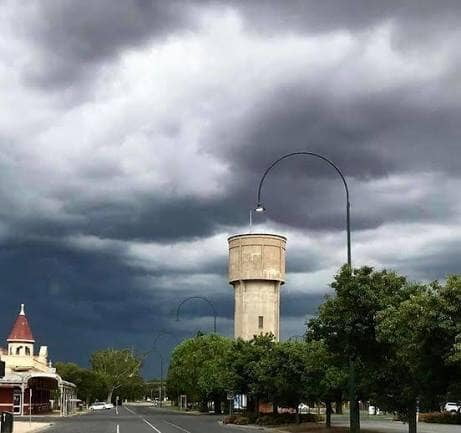
Regional Australian businesses shouldn’t have to wait years for the electricity network to catch up with their growth.
Yet that is increasingly the reality.
Businesses in and around Nathalia are experiencing the consequences of constrained electricity infrastructure: outages, brownouts, voltage issues, limited capacity and uncertainty about when traditional network upgrades will occur.
For an agricultural and industrial community dependent on reliable electricity, energy isn’t simply another operating expense.
It is critical infrastructure.
What if we stopped waiting for the grid?
The Nathalia Loop is being developed around a different idea.
Instead of looking at every business as an isolated electricity consumer, Surge Energy and its project partners are exploring how businesses can become part of a coordinated local energy ecosystem.
Individual sites can potentially generate and store energy behind the meter through solar, batteries and intelligent energy management.
Over time, those distributed assets can form the foundation for a much larger local energy network.
The vision is to enable businesses to:
- generate more of their own electricity;
- store energy for when it is most valuable;
- improve resilience during network constraints;
- reduce exposure to energy-price volatility;
- intelligently manage loads and distributed energy resources;
- explore peer-to-peer and local energy trading opportunities where regulatory and market arrangements permit; and
- progressively create a more resilient regional energy system.
Energy infrastructure can become distributed.
Traditionally, Australia’s electricity system has relied on large generators transmitting electricity across long distances through centralised networks.
Distributed Energy Resources change that architecture. Solar, batteries, microgrids, intelligent gateways, energy-management systems and flexible loads allow generation and storage to move closer to where electricity is actually consumed.
For regional communities, that is potentially transformative.
The answer to an electricity constraint may not always be another larger transmission line.
Sometimes the better solution may be hundreds of coordinated energy assets located throughout the community.
A model that could extend beyond Nathalia
The significance of the Nathalia Loop goes beyond one Victorian town.
Regional communities across Australia face similar challenges: ageing infrastructure, constrained networks, growing electricity demand, increasing electrification, and long lead times for major network upgrades.
The Nathalia Loop provides an opportunity to demonstrate another approach.
Generate locally. Store locally. Manage intelligently. Share value locally.
Surge Energy believes regional Australia can become a leader in Australia’s distributed energy transition.
Nathalia could help show how.